
 Tiếng Việt
 Cloud server services
 Business Email
 Content Delivery Network
 Cloud PC
 Linux Security and Hardening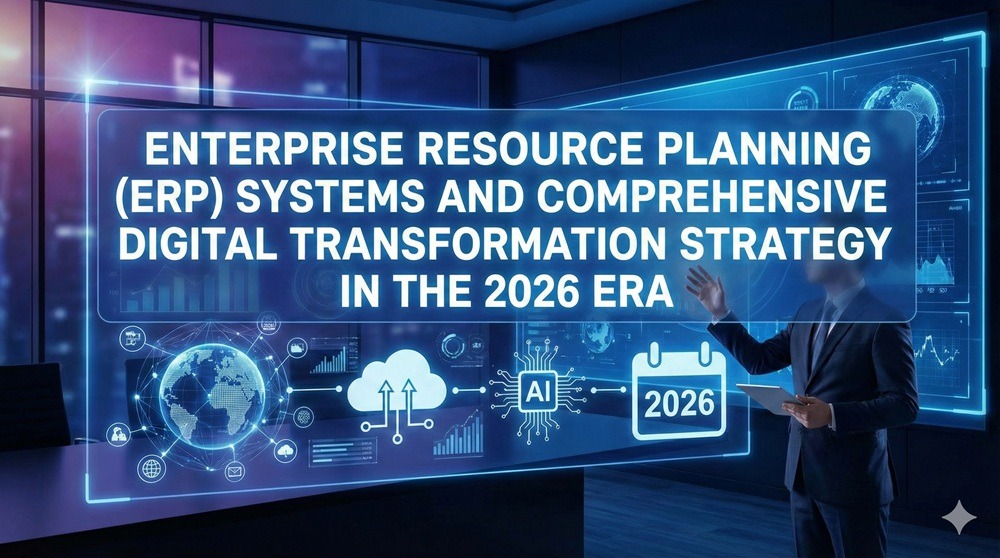
As the global economy continues shifting toward a data‑driven operating model, Enterprise Resource Planning (ERP) systems have solidified their role as the indispensable “operating system” of modern organizations. ERP today is more than an integrated software suite—it is a strategic architecture enabling organizations to optimize financial, human, and physical resources under a single, unified data platform.
In Vietnam, the introduction of new regulatory frameworks effective in 2026—such as Circular 99/2025/TT-BTC on corporate accounting standards and the Personal Data Protection Law—marks a pivotal turning point, compelling ERP systems to evolve significantly to maintain compliance and competitiveness.
Architecture & Operating Philosophy of Modern ERP Systems
The core value of ERP lies in end‑to‑end integration, where data is entered once at its point of origin and seamlessly flows across departments without interruption or discrepancies. This eliminates information silos commonly found when organizations use disparate tools such as Excel for inventory, standalone accounting software, or isolated CRM platforms. For example, once a sales order is created, the ERP system automatically checks inventory levels, updates the production plan, notifies procurement of required materials, and simultaneously records projected financial indicators—without redundant manual input. Modern ERP architecture is built on three key technical pillars:
- Centralized Database – ensuring a Single Version of Truth across the organization.
- Modular Design – allowing phased deployment of modules like Accounting, Sales, or Manufacturing as needed.
- Standardized Business Processes – leveraging industry best practices to drive both digitization and operational excellence.
Core Functional Modules and Their Interconnected Roles
A complete ERP solution in 2026 transcends traditional modules by embedding advanced analytics and broader ecosystem connectivity.
| Functional Module | Strategic Role |
|---|---|
| Finance & Accounting | Acts as the financial backbone, managing cash flow, budgeting, fixed assets, and financial reporting aligned with VAS/IFRS. |
| Human Resources (HRM) | Manages the full employee lifecycle—recruitment, onboarding, training, timekeeping, payroll, and regulatory compliance. |
| Manufacturing Management | Oversees Material Requirements Planning (MRP), Bill of Materials (BOM), production routing, and accurate product costing. |
| Inventory & Supply Chain | Optimizes stock levels, real‑time warehouse management, procurement cycles, and logistics coordination. |
| Customer Relationship Management (CRM) | Manages sales pipelines, customer interaction histories, and loyalty programs to maximize customer lifetime value. |
| Project Management & Digital Office | Coordinates tasks, monitors project timelines, budgets, and automates internal approval workflows. |
These modules are interconnected not just through shared data but through automated workflow orchestration. For example, the Accounting module can automatically restrict warehouse release transactions if a customer exceeds their credit limit in the Sales module. This enhances risk management and enforces compliance with internal controls.
ERP Deployment Models: Strategic Infrastructure Decisions
Selecting a deployment model influences data governance, operating costs, and agility:
On‑Premise ERP
Enterprises own and manage their infrastructure, ideal for industries requiring strict data sovereignty. Benefits include deep customization and full autonomy, but they come with high CAPEX, maintenance burdens, and slower upgrade cycles.
Cloud ERP / SaaS
By 2026, SaaS ERP dominates due to flexibility, rapid deployment, and subscription‑based OPEX. Cloud ERP democratizes advanced technologies for SMEs, ensuring mobility and automatic updates handled by the provider.
Hybrid ERP & Open‑Source ERP
Hybrid models blend the security of on‑premise for core data (e.g., finance, production formulas) with cloud-based CRM or HRM for external interactions. Open‑source ERP (e.g., Odoo, ERPNext) is gaining popularity thanks to high customization potential and extensive community support.
Digital Transformation in Financial Management: Circular 99/2025/TT-BTC
Effective January 1, 2026, Circular 99 replaces Circular 200, introducing a transformative shift toward IFRS‑aligned financial management.
Key Changes and ERP Implications
Circular 99 also mandates Internal Control as a compulsory component, requiring ERP systems to support detailed audit trails, user permissions, and digital recordkeeping aligned with the 2023 Electronic Transactions Law.
| Regulatory Change | ERP Impact |
|---|---|
| Removal of old accounts | ERP must handle balances for deprecated accounts (e.g., 611, 1562). |
| Introduction of new accounts | Support for accounts like 215 (Biological Assets), 82112 (Additional CIT under Global Minimum Tax). |
| Full autonomy in Chart of Accounts | ERP must enable dynamic, multi‑level COA configuration without disrupting existing data links. |
| Updated financial report templates | ERP must update automated reporting formulas accordingly. |
Mandatory Technology and Internal Control Requirements
For the first time, accounting regulations require “Internal Control” as a mandatory component of business operations.6 This means that a standard ERP 2026 system must ensure the audit trail of every transaction: who created it, who approved it, when it was modified, and for what reason.2 Using simple accounting software without strict access control and audit trail functions will no longer meet this legal requirement.6
In addition, Circular 99 also requires absolute synchronization with the 2023 Electronic Transactions Law, paving the way for the complete digitization of accounting documents, ledgers, and journals.27 Leading domestic ERP solutions such as Bravo, MISA AMIS, and FAST have quickly updated their data mapping features, allowing businesses to test scenarios for converting balances from Circular 200 to Circular 99. Start implementing the 99 program from the last quarter of 2025 to ensure the system operates smoothly by January 1, 2026.
Data Security & Compliance with the Personal Data Protection Law (2026)
ERP solutions must adopt Privacy by Design, including:
- Data encryption (salary, banking info, biometric data)
- Multi‑Factor Authentication (MFA)
- Role‑based access adhering to least‑privilege principles
- Mandatory data deletion post-contract unless otherwise agreed
Violations—especially in cross-border data transfers—may incur penalties of up to 5% of the previous fiscal year’s revenue.
Enterprise Obligations in Personal Data Processing
Key Regulations and Corresponding Impacts & Penalties
| Regulation | Impact and Enforcement Measures |
|---|---|
| Data Deletion After Contract Termination | Organizations must delete or permanently destroy an employee’s personal data upon termination of employment, unless otherwise agreed in writing. |
| Data Subject Consent | Enterprises must obtain explicit and informed consent from individuals before processing their personal data within the ERP system. |
| Cross‑Border Data Transfer | Violations related to transferring personal data outside Vietnam may result in penalties of up to 5% of the previous fiscal year’s revenue. |
| Breach Notification Requirements | Organizations are obligated to notify regulatory authorities in the event of a data breach or unauthorized disclosure. |
Legal Considerations for Cloud ERP Hosted Abroad
The use of international Cloud ERP platforms with servers located overseas has become a significant legal concern.
Implementation partners in Vietnam—such as FPT IS and major local software vendors—are increasingly prioritizing domestic data centers to ensure full compliance with national data sovereignty regulations.
Enterprises must conduct thorough due diligence on the security capabilities of ERP vendors and require commitments to international compliance standards such as:
- ISO 27001 (Information Security Management System)
- SOC 2 (Service Organization Controls for Security, Availability, and Confidentiality)
These certifications help ensure that data protection, access control, and risk management measures meet global benchmarks before an investment decision is made.
Implementation Roadmap & Success Factors
ERP implementation is complex and failure-prone. The success boundary lies not in technology but in change management.
Standard Implementation Phases
- Preparation & Process Assessment
- Solution Blueprint
- System Configuration & Custom Development
- Data Migration & User Training
- User Acceptance Testing (UAT)
- Go‑Live & Hypercare Support
Why ERP Projects Fail
- Lack of leadership commitment
- Resistance to change
- Over‑customization that breaks upgrade paths
- Inadequate training or poorly cleaned data
Best practice: “Think Big, Start Small”—adopt standard processes unless industry-specific exceptions are essential.
ERP Market Landscape in Vietnam (2026)
Global Leaders
- SAP S/4HANA – best-in-class for large enterprises with deep industry verticals.
- Oracle NetSuite – leading cloud-native ERP for fast-growing multi‑entity businesses.
- Microsoft Dynamics 365 – flexible, scalable, and deeply integrated with Microsoft 365 and Azure.
Local Market Leaders
- Bravo – exceptional customization for manufacturing and construction.
- MISA AMIS – unified SME‑focused platform with high automation and strong compliance.
- FAST – web-based ERP specializing in cost accounting and supply chain for mid-sized firms.
Financial Analysis: TCO, ROI & Hidden Costs
Typical Cost Structure (2026)
| Cost Component | Reference Value | Notes |
|---|---|---|
| License / SaaS Fees | $1,000 – $10,000 per user | Varies by vendor & module scope |
| Implementation Services | 100%–200% of software cost | Process mapping, configuration, training |
| Customization | Based on man‑hours | High variability |
| Annual Maintenance | 15%–20% of license cost | Updates & support |
| IT Infrastructure | Case‑by‑case | Required for on‑premise deployments |
| Version Upgrades | Near full redeployment | When law or technology changes |
Typical ROI
- 15–20% reduction in inventory
- 30–50% reduction in manual data entry
- Month‑end close shortened from weeks to days
- Eliminated reconciliation errors between departments
Future ERP Trends: AI, Generative AI, IoT
AI & Generative AI
AI enables natural‑language analytics such as:
“Generate a Q4 revenue comparison for the three HCMC branches and forecast next quarter.”
Zero‑touch automation handles repetitive tasks like invoice matching or micro‑expense approvals.
IoT Integration
- IoT sensors provide real‑time OEE data and predictive maintenance.
- RFID and IoT enhance retail stock accuracy and automate replenishment workflows.
Sources
- ERP là gì? Tính năng và giá trị của ERP đối với doanh nghiệp – Citek, truy cập vào tháng 2 9, 2026, https://www.citek.vn/tai-nguyen-chuyen-nganh/blog/erp-la-gi-loi-ich-cua-he-thong-erp-trong-quan-ly-doanh-nghiep
- Hệ thống ERP là gì? Tìm hiểu chi tiết hệ thống ERP trong doanh nghiệp – MISA AMIS, truy cập vào tháng 2 9, 2026, https://amis.misa.vn/1281/he-thong-erp/
- ERP là gì? Phần mềm ERP thay đổi cách doanh nghiệp vận hành – Base, truy cập vào tháng 2 9, 2026, https://base.vn/blog/phan-mem-erp-la-gi/
- Phần mềm ERP là gì? Lợi ích của phần mềm ERP với doanh nghiệp, truy cập vào tháng 2 9, 2026, https://fast.com.vn/phan-mem-erp-la-gi/
- Điểm mới thông tư 99/2025/TT-BTC thay thế thông tư 200 – KIỂM TOÁN IFA, truy cập vào tháng 2 9, 2026, https://ifa.com.vn/vi/diem-moi-thong-tu-99
- Thông tư 99/2025 thay đổi sân chơi thuế DN như thế nào? – taca consulting, truy cập vào tháng 2 9, 2026, https://taca.com.vn/thong-tu-99-2025/
- Từ 1/1/2026, dữ liệu cá nhân của người Việt được bảo vệ “xuyên biên giới” – Tỉnh Hà Tĩnh, truy cập vào tháng 2 9, 2026, https://hatinh.gov.vn/vi/bai-viet/tu-112026-du-lieu-ca-nhan-cua-nguoi-viet-duoc-bao-ve-xuyen-bien-gioi
- Từ Luật Bảo vệ dữ liệu cá nhân đến an ninh dữ liệu – Báo Nhân Dân, truy cập vào tháng 2 9, 2026, https://nhandan.vn/tu-luat-bao-ve-du-lieu-ca-nhan-den-an-ninh-du-lieu-post936361.html
- ERP là gì? Các phần mềm ERP hiện nay được ưa chuộng nhất Việt Nam – ITG Technology, truy cập vào tháng 2 9, 2026, https://itgtechnology.vn/phan-mem-erp/
- Phần mềm ERP phổ biến ở Việt Nam tốt nhất hiện nay – MISA AMIS, truy cập vào tháng 2 9, 2026, https://amis.misa.vn/1353/phan-mem-erp/
- Hướng dẫn lựa chọn hệ thống ERP trong sản xuất phù hợp nhất – MISA AMIS, truy cập vào tháng 2 9, 2026, https://amis.misa.vn/114008/he-thong-erp-trong-san-xuat/
- 15 nguyên nhân khiến triển khai ERP thất bại – A1 Consulting, truy cập vào tháng 2 9, 2026, https://www.a1consulting.vn/blog/dx-blog-9/trien-khai-erp-vi-sao-that-bai-229
- 10 thách thức triển khai ERP và giải pháp, truy cập vào tháng 2 9, 2026, https://ocd.vn/10-thach-thuc-trien-khai-erp-va-giai-phap/
- CÁC TIÊU CHÍ ĐÁNH GIÁ VÀ CHỌN LỰA PHẦN MỀM ERP PHÙ HỢP VỚI ĐƠN VỊ KINH DOANH – CHO THUÊ BẤT ĐỘNG SẢN, truy cập vào tháng 2 9, 2026, https://www.xboss.com/blog/tin-tuc-1/post/cac-tieu-chi-danh-gia-va-chon-lua-phan-mem-erp-phu-hop-voi-don-vi-kinh-doanh-cho-thue-bat-dong-san-12
- Cập nhật xu hướng mới nhất của hệ thống ERP cho doanh nghiệp hiện nay – ERPViet, truy cập vào tháng 2 9, 2026, https://erpviet.vn/cap-nhat-xu-huong-moi-nhat-cua-he-thong-erp-cho-doanh-nghiep-hien-nay/
- Phần mềm ERP – Phần mềm quản trị tổng thể doanh nghiệp – BRAVO, truy cập vào tháng 2 9, 2026, https://www.bravo.com.vn/
- Tìm hiểu giải pháp ERP cho doanh nghiệp sản xuất – ERPViet, truy cập vào tháng 2 9, 2026, https://erpviet.vn/tim-hieu-giai-phap-erp-cho-doanh-nghiep-san-xuat/
- Giải pháp ERP cho doanh nghiệp – FPT IS, truy cập vào tháng 2 9, 2026, https://fpt-is.com/erp/
- ERP ngành bán lẻ: Hệ thống ERP nào chuyên sâu cho DN bán lẻ? – MBW Blog, truy cập vào tháng 2 9, 2026, https://blog.mbw.vn/erp-nganh-ban-le/
- Xu hướng sử dụng Cloud ERP: Triển khai nhanh gọn, tiết kiệm chi phí – ERPViet, truy cập vào tháng 2 9, 2026, https://erpviet.vn/xu-huong-su-dung-cloud-erp-trien-khai-nhanh-gon-tiet-kiem-chi-phi/
- Phần mềm ERP giá bao nhiêu? Chi triển khai ERP gồm những gì? – FPT IS, truy cập vào tháng 2 9, 2026, https://fpt-is.com/goc-nhin-so/phan-mem-erp-gia-bao-nhieu/
- 10 lưu ý giúp lựa chọn phần mềm ERP phù hợp cho doanh nghiệp – Citek, truy cập vào tháng 2 9, 2026, https://www.citek.vn/tai-nguyen-chuyen-nganh/blog/10-tip-lua-chon-erp
- ERP đóng gói hay viết theo yêu cầu? Lựa chọn nào tối ưu cho doanh nghiệp – Asia Soft, truy cập vào tháng 2 9, 2026, https://asiasoft.com.vn/2023/11/23/erp-dong-goi-hay-viet-theo-yeu-cau-lua-chon-erp-phu-hop-cho-doanh-nghiep/
- Phần mềm ERP giá bao nhiêu? Bảng giá triển khai chi tiết 2025 – AccNet, truy cập vào tháng 2 9, 2026, https://accnet.vn/phan-mem-erp-gia-bao-nhieu
- Odoo vs SAP vs Oracle vs Microsoft Dynamics: Which ERP Is Best for SMEs?, truy cập vào tháng 2 9, 2026, https://erpdevelopers.pro/odoo-vs-sap-vs-oracle-vs-microsoft-dynamics/
- Nghị quyết số 198/2025/QH15 của Quốc hội: Về một số cơ chế, chính sách đặc biệt phát triển kinh tế tư nhân – Công ty phần mềm Kế toán DaMi, truy cập vào tháng 2 9, 2026, https://damivn.com/van-ban-moi/
- 10 điểm quan trọng của TT99/2025-BTC từ ngày 01/01/2026, truy cập vào tháng 2 9, 2026, https://giasuketoantruonghcm.com/10-diem-quan-trong-cua-tt992025-btc-tu-ngay-01012026
- Xây dựng hệ thống ERP an toàn: Những tiêu chuẩn bảo mật doanh nghiệp cần tuân thủ, truy cập vào tháng 2 9, 2026, https://erpviet.vn/xay-dung-he-thong-erp-an-toan-nhung-tieu-chuan-bao-mat-doanh-nghiep-can-tuan-thu/
- BÁO GIÁ PHẦN MỀM KẾ TOÁN DOANH NGHIỆP VỪA & NHỎ – MISA SME 2026, truy cập vào tháng 2 9, 2026, https://misasme.misa.vn/order/Content/Document/SME-DK-BG-VI-3.0_Bao_gia_ban_moi_SME_Tra_phi_dinh_ky.pdf
- Luật Bảo vệ dữ liệu cá nhân có hiệu lực từ 1/1/2026 – VnEconomy, truy cập vào tháng 2 9, 2026, https://vneconomy.vn/khong-hien-dien-phap-nhan-doanh-nghiep-van-phai-tuan-thu-luat-bao-ve-du-lieu-ca-nhan-tu-ngay-112026.htm
- Những điểm mới của pháp luật bảo vệ dữ liệu cá nhân năm 2026 – Phần 1, truy cập vào tháng 2 9, 2026, https://lexnovum.com.vn/nhung-diem-moi-cua-phap-luat-bao-ve-du-lieu-ca-nhan-nam-2026-phan-1/
- Hướng dẫn pháp lý: Tuân thủ pháp luật bảo vệ dữ liệu cá nhân tại Việt Nam cho doanh nghiệp – HM&P: Vietnam International Law Firm, truy cập vào tháng 2 9, 2026, https://hmplaw.vn/vi/huong-dan-phap-ly-tuan-thu-phap-luat-bao-ve-du-lieu-ca-nhan-tai-viet-nam-cho-doanh-nghiep
- [Recap] Webinar: Luật Bảo vệ dữ liệu cá nhân – Doanh nghiệp cần làm gì để tuân thủ quy định mới? – LuatVietnam, truy cập vào tháng 2 9, 2026, https://luatvietnam.vn/su-kien-luatvietnam/recap-webinar-luat-bao-ve-du-lieu-ca-nhan-doanh-nghiep-can-lam-gi-de-tuan-thu-quy-dinh-moi-216-106393-article.html
- Một số quy định đáng chú ý trong Luật Bảo vệ dữ liệu cá nhân 2025 – Bộ Công an, truy cập vào tháng 2 9, 2026, https://bocongan.gov.vn/chinh-sach-phap-luat/bai-viet/mot-so-quy-dinh-dang-chu-y-trong-luat-bao-ve-du-lieu-ca-nhan-2025-1753847906
- Top 10 công ty cung cấp phần mềm ERP tốt nhất hiện nay – FPT IS, truy cập vào tháng 2 9, 2026, https://fpt-is.com/goc-nhin-so/cong-ty-cung-cap-phan-mem-erp/
- Top 5 nhà cung cấp các phần mềm ERP hiện nay, truy cập vào tháng 2 9, 2026, https://asoft.com.vn/top-5-nha-cung-cap-cac-phan-mem-erp-hien-nay/
- Nguyên nhân dẫn đến thất bại trong việc triển khai ERP, truy cập vào tháng 2 9, 2026, https://www.rosysoft.vn/tin-tuc/nguyen-nhan-dan-den-that-bai-trong-viec-trien-khai-erp
- 6 lý do khiến doanh nghiệp thất bại khi triển khai ERP – Bemo Cloud, truy cập vào tháng 2 9, 2026, https://bemo-cloud.com/trien-khai-erp.html
- 5 yếu tố chủ yếu ảnh hưởng đến việc triển khai thành công dự án ERP từ phía doanh nghiệp – Phần mềm kế toán & Phần mềm ERP, truy cập vào tháng 2 9, 2026, https://fast.com.vn/5-yeu-to-chu-yeu-anh-huong-den-viec-trien-khai-thanh-cong-du-an-erp-tu-phia-doanh-nghiep/
- Top 5 phần mềm kế toán do Việt Nam sản xuất phổ biến hiện nay, truy cập vào tháng 2 9, 2026, https://sanketoan.vn/tin-tuc/top-5-phan-mem-ke-toan-chat-luong-hien-nay
- Chi phí bảo trì và nâng cấp phần mềm ERP, truy cập vào tháng 2 9, 2026, https://fast.com.vn/chi-phi-bao-tri-va-nang-cap-phan-mem-erp/
- 5 Công ty cung cấp phần mềm ERP uy tín, chuyên nghiệp trên thị trường – Lạc Việt, truy cập vào tháng 2 9, 2026, https://lacviet.vn/cong-ty-cung-cap-phan-mem-erp/
- Odoo vs Dynamics 365 vs Oracle vs SAP: Which ERP System is Right for Your Business?, truy cập vào tháng 2 9, 2026, https://www.rizwinazeez.com/post/odoo-vs-dynamics-365-vs-oracle-vs-sap
- Top 17 công ty cung cấp phần mềm ERP uy tín hàng đầu Việt Nam – AccNet, truy cập vào tháng 2 9, 2026, https://accnet.vn/cong-ty-cung-cap-phan-mem-erp
- So sánh phần mềm ERP: Odoo, SAP, Oracle và Microsoft Dynamics – A1 Consulting, truy cập vào tháng 2 9, 2026, https://www.a1consulting.vn/blog/dx-blog-9/so-sanh-phan-mem-erp-160
- Phần mềm ERP giá bao nhiêu? Bảng giá Phần mềm Fast ERP, truy cập vào tháng 2 9, 2026, https://fast.com.vn/bang-gia-giai-phap-phan-mem-erp-fast-business-online/
- Tiêu chí lựa chọn ERP phù hợp cho Doanh nghiệp – Viindoo, truy cập vào tháng 2 9, 2026, https://viindoo.com/vi/blog/giai-phap-viindoo-4/erp-selection-2151
- Chi phí bảo trì và nâng cấp phần mềm ERP – SinnovaSoft, truy cập vào tháng 2 9, 2026, https://www.sinnovasoft.com/tin-tuc/kien-thuc-erp/chi-phi-bao-tri-va-nang-cap-phan-mem-erp-163
- AI tích hợp vào hệ thống ERP mang lại lợi ích gì cho doanh nghiệp? – DIGINET Corporation, truy cập vào tháng 2 9, 2026, https://diginet.com.vn/tich-hop-tri-tue-nhan-tao-ai-vao-erp-he-thong-quan-ly-cua-tuong-lai-phan-2.html
- 15+ Ứng dụng AI trong các ngành nghề, lĩnh vực – CloudGO, truy cập vào tháng 2 9, 2026, https://cloudgo.vn/ung-dung-ai