
 Tiếng Việt
 Cloud server services
 Business Email
 Content Delivery Network
 Cloud PC
 Linux Security and Hardening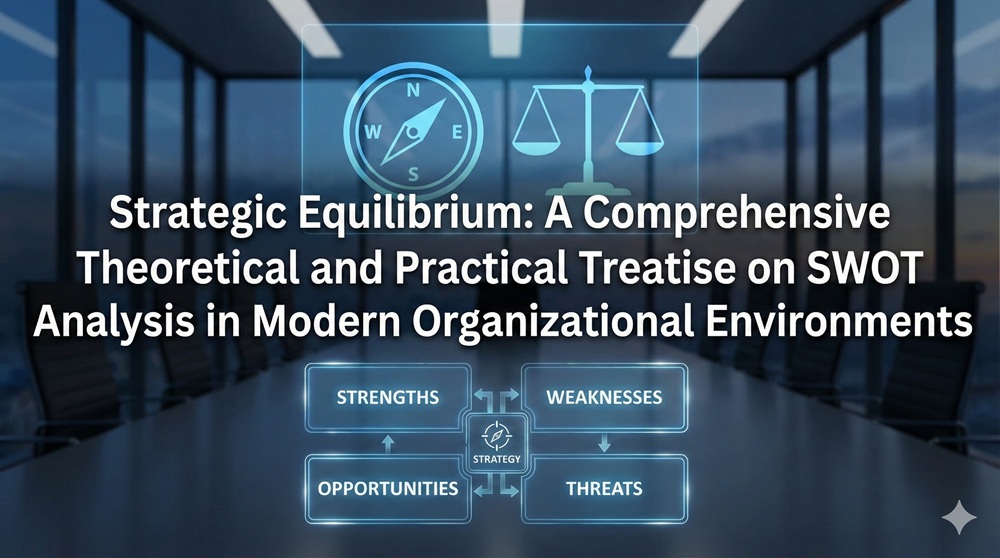
The genesis of strategic planning in the modern corporate era is fundamentally anchored in the development and refinement of the SWOT analysis, a conceptual framework that has evolved from a nascent academic exercise into a global standard for organizational diagnostic assessment. Historically credited to the management consultant Albert Humphrey at the Stanford Research Institute during the 1960s and 1970s, the framework was designed to analyze data from Fortune 500 firms to understand the drivers of long-range planning success and failure.1 While Humphrey’s attribution remains the most widely cited, the intellectual genealogy of the tool suggests a more complex convergence of thought, involving concurrent developments at the Harvard Business School.3 These dual origins reflect a broader shift in management science from functional administration to strategic policy, wherein organizations began to view their internal capabilities not as isolated variables but as dynamic entities existing in constant negotiation with their external environments.4
The Historiography of Strategic Planning and the Evolution of Analysis
The historical narrative of strategic analysis is often partitioned between the pedagogical shifts at Harvard and the empirical research conducted at the Stanford Research Institute. In the early 20th century, specifically starting in 1912, Harvard Business School introduced a required course in “Business Policy” aimed at integrating departmental functions like accounting and finance into a unified executive perspective.4 By the early 1950s, Professors George Albert Smith Jr. and C. Roland Christensen began training students to investigate whether a firm’s internal strategy effectively matched the requirements of its competitive situation.3 This “fit” between organization and environment became the foundational logic of what would later become the SWOT matrix.5
Concurrent with these developments, Kenneth Andrews expanded this line of inquiry, arguing that every organizational subunit must maintain clearly defined goals to ensure a deliberate strategic direction.5 The formalization of the SWOT acronym—Strengths, Weaknesses, Opportunities, and Threats—is frequently traced back to a 1963 conference at Harvard where the framework was presented as a major advancement in competitive thinking.3 However, the role of Albert Humphrey at the Stanford Research Institute (SRI) remains pivotal. Humphrey led a research project that processed massive quantities of corporate data, originally developing the “SOFT” analysis.3 This model categorized factors as Satisfactory (present positive), Opportunity (future positive), Fault (present negative), and Threat (future negative).3 When Humphrey presented this model in Zurich and later in Britain, the terminology shifted to Strengths and Weaknesses, completing the transformation into the modern SWOT framework.3
| Historical Milestone | Institution | Primary Contribution | Strategic Shift | Source |
| 1912 | Harvard Business School | Business Policy Course | Integration of functional areas | 4 |
| 1950s | Harvard Business School | Smith & Christensen Case Studies | Environment-Strategy alignment | 3 |
| 1960s | Stanford Research Institute | Albert Humphrey’s SOFT Model | Empirical long-range planning | 3 |
| 1963 | Harvard Policy Conference | Formalization of SWOT Acronym | Competitive strategy diffusion | 3 |
| 1980s | Academic Literature | Porter & Mintzberg Textbooks | Widespread popularization | 3 |
The transition from SOFT to SWOT was more than a semantic change; it represented a structural refinement in how organizations prioritize action. The “Faults” of the SRI model became “Weaknesses,” encouraging a more introspective and diagnostic approach to internal resource gaps, while “Satisfactory” elements were reclassified as “Strengths,” emphasizing the need for competitive differentiation.8 This evolution mirrored the increasing complexity of the global business landscape, as firms in the late 1950s and 1960s were forced to consider multinational competition and rapidly shifting technological cycles as primary planning factors.4
The Structural Anatomy of the SWOT Matrix
The SWOT analysis is fundamentally a 2×2 matrix designed to visualize the strategic choices available to a company.2 It organizes information along two primary axes: the origin of the factor (internal versus external) and the nature of the factor (helpful versus harmful).2 This categorization allows practitioners to map an organization’s “Achilles’ heel” alongside its competitive assets while simultaneously setting the broader context of the market landscape.2
Internal Determinants: Strengths and Weaknesses
The internal dimensions of the SWOT matrix—Strengths and Weaknesses—focus on the tangible and intangible attributes of the organization that are within its immediate control.7 These factors typically include financial resources, human capital, proprietary technology, and operational efficiencies.10 Strengths are identified as characteristics that lend an advantage over competition, such as a strong brand reputation, patented intellectual property, or a highly skilled workforce.1 In a clinical setting, for instance, a strength might be the provision of unique or lowest-cost services that patients perceive as superior to local alternatives.1
Conversely, weaknesses are internal attributes that detract from the organization’s ability to achieve its objectives.12 These may manifest as antiquated procedures, expertise gaps, high staff turnover, or insufficient capital.8 The identification of weaknesses is often the most critical phase of the analysis, as it reveals vulnerabilities that competitors may exploit.14 Modern methodologies suggest using root-cause analysis—a tool of operational efficiency and lean thinking—to identify the underlying reasons for identified weaknesses rather than simply listing symptoms.14
External Determinants: Opportunities and Threats
The external environment comprises factors that an organization cannot directly control but must navigate to remain viable.12 Opportunities are attractive external factors that represent potential for growth or improved competitive positioning.12 These arise from technological advancements, changes in governmental policy, new trade agreements, or shifts in societal behaviors.10 For example, the emergence of a work-from-home trend represents an opportunity for a communication software firm to expand its user base.14
Threats are external risks that could jeopardize the organization’s mission or financial stability.1 These include rising competition, economic downturns, supply chain disruptions, and changing regulatory standards.10 Analyzing threats requires a proactive approach, identifying obstacles like increased tariffs or a shortage of recruits that could hinder operations.13 Effective strategic planning classifies these threats by their severity and probability, allowing the organization to develop robust contingency plans.12
| Matrix Quadrant | Interaction Type | Strategic Goal | Key Question | Source |
| Strengths | Internal / Helpful | Leverage & Protect | What unique assets do we own? | 1 |
| Weaknesses | Internal / Harmful | Mitigate & Improve | Where are we lacking resources? | 12 |
| Opportunities | External / Helpful | Exploit & Grow | What trends can we capitalize on? | 10 |
| Threats | External / Harmful | Monitor & Defend | What risks could derail us? | 12 |
The objective of the SWOT matrix is to achieve “strategic fit,” defined as the alignment between an organization’s internal capabilities and the demands of its external environment.1 This alignment is not static; rather, it is a dynamic equilibrium that must be constantly reassessed as markets evolve and internal resources fluctuate.11
Methodological Rigor: Facilitating Collaborative Strategy
The effectiveness of a SWOT analysis is heavily dependent on the methodology used to gather and synthesize information. Because the framework relies on qualitative judgments, it is susceptible to bias if conducted in isolation by a limited number of individuals.1 Professional facilitators advocate for a collaborative approach involving cross-functional teams to ensure a plurality of perspectives.8
The Workshop Protocol and Team Dynamics
A typical SWOT workshop involves a team of five to ten participants, small enough to remain manageable but diverse enough to capture insights from different departments such as marketing, operations, and finance.8 The role of the facilitator is to guide the discussion through each quadrant while maintaining an environment of psychological safety where honest reflection is encouraged.19 Ground rules are established at the outset, emphasizing that all ideas are valid and that the focus should remain on constructive, solution-oriented dialogue.19
One common methodological error is “anchoring,” where the group focuses on a single perceived strength or threat at the expense of other critical factors.1 To prevent this, facilitators often employ brainstorming techniques such as “dot-sticking” or anonymous contribution to ensure that even sensitive internal weaknesses are addressed.19 In larger organizations, breakout groups are utilized to allow for smaller, focused discussions, with participants later reconvening to share and prioritize findings.20
Prioritization and Actionability
The outcome of a brainstorming session often results in a massive quantity of information that lacks focus. The subsequent phase of the methodology involves refining and prioritizing these inputs.13 Teams must identify the most critical items in each quadrant—those that have the highest probability of occurrence and the greatest potential impact on the organization’s goals.12 Effective strategy formulation translates these prioritized items into “SMART” goals—Specific, Measurable, Action-oriented, Realistic, and Time-sensitive.25
| Workshop Step | Objective | Primary Tool | Source |
| Preparation | Set objective & scope | Objective Statement | 8 |
| Brainstorming | Capture all factors | Post-its / Digital Whiteboard | 22 |
| Theme Sorting | Group similar ideas | Affinity Mapping | 19 |
| Prioritization | Rank critical factors | Dot Voting / Secret Ballot | 19 |
| Strategic Planning | Develop action links | TOWS Matrix / SMART Goals | 9 |
The refinement process serves a dual purpose: it manages complexity and builds consensus among stakeholders.13 By limiting the matrix to the most critical ten points per quadrant, the organization ensures that the resulting strategy is digestible and focused on the most pressing levers for success.20
Theoretical Extensions: The TOWS Strategic Formulation
A significant limitation of the traditional SWOT matrix is its tendency to produce a static list of factors without a clear mechanism for strategy development. The TOWS Matrix (Threats, Opportunities, Weaknesses, Strengths) was introduced to bridge this gap, serving as an “action-oriented” extension that correlates findings to form specific strategies.9 While SWOT acts as a diagnostic tool, TOWS is a planning framework that explores the interrelationships between internal and external forces.9
The Four Quadrants of TOWS Strategy
The matching process in the TOWS framework yields four distinct strategic categories, designed to leverage strengths and address vulnerabilities in the context of external reality 9:
- SO (Maxi-Maxi) Strategies: These are aggressive growth strategies where a firm uses its internal strengths to capitalize on external opportunities.9 An organization in this quadrant aims to lead the market by exploiting favorable trends with its core competencies.9
- WO (Mini-Maxi) Strategies: These strategies focus on overcoming internal weaknesses by taking advantage of external opportunities.9 A company might use a market opportunity to acquire the technology or expertise it currently lacks.9
- ST (Maxi-Mini) Strategies: This approach utilizes internal strengths to mitigate or counteract external threats.9 For example, a firm with a strong financial position (strength) might survive an economic downturn (threat) that eliminates its competitors.9
- WT (Mini-Mini) Strategies: These are defensive or “survival” strategies designed to minimize weaknesses and avoid threats simultaneously.9 This might involve merging with another firm, divesting underperforming assets, or liquidating a business unit to prevent catastrophic failure.9
Strategic Selection and Implementation
The transition from TOWS matching to strategy implementation requires evaluating the feasibility and impact of each proposed path.9 Organizations often find that they must prioritize SO and ST strategies to maintain market momentum while addressing the WT quadrant as a risk management necessity.9 This systematic evaluation helps decision-makers move beyond a simple inventory of factors and toward a cohesive “game plan” that accounts for both the organization’s potential and its limitations.2
The Competitive Landscape: Integrating Complementary Frameworks
The SWOT analysis does not exist in a vacuum; its utility is enhanced when used alongside other strategic management tools that provide deeper insight into specific domains.13 In modern professional practice, SWOT is frequently integrated with VRIO, PESTLE, and Porter’s Five Forces to provide a 360-degree view of the strategic landscape.9
SWOT vs. VRIO: The Resource-Based View
While SWOT provides a broad overview of internal and external factors, the VRIO framework (Value, Rarity, Inimitability, Organization) focuses exclusively on internal resources to identify sustained competitive advantage.31 Developed by Jay Barney, VRIO asks whether a resource allows a firm to exploit opportunities (Value), if it is possessed by only a few competitors (Rarity), if it is costly for others to replicate (Inimitability), and if the firm is organized to capture its value (Organization).33
Integrating VRIO into the “Strengths” quadrant of a SWOT analysis allows managers to distinguish between simple operational advantages and true core competencies that can be leveraged for long-term success.31 While a SWOT might list “efficient production” as a strength, VRIO would determine if that efficiency is unique and inimitable enough to provide an edge that competitors cannot easily overcome.31
SWOT vs. PESTLE: The Macro-Environmental Scan
PESTLE analysis provides a granular examination of the external macro-environment by assessing Political, Economic, Social, Technological, Legal, and Environmental factors.9 It serves as a comprehensive tool for identifying the variables that populate the “Opportunities” and “Threats” quadrants of the SWOT matrix.12 While SWOT is introspective, PESTLE is entirely outward-facing, pushing organizations to consider global trends and societal shifts that might impact their long-term strategic direction.30
SWOT vs. Porter’s Five Forces: Industry Dynamics
Porter’s Five Forces framework analyzes the competitive forces within an industry to determine its structural attractiveness and profit potential.29 By evaluating the threat of new entrants, the bargaining power of buyers and suppliers, the threat of substitute products, and competitive rivalry, organizations gain a deeper understanding of the “Threats” quadrant.9 Using SWOT and Five Forces together allows a firm to match its internal capabilities with the structural dynamics of its industry, identifying whether its strengths are sufficient to withstand intense competitive pressures.9
| Framework | Perspective | Primary Utility | Integrated Benefit | Source |
| VRIO | Micro / Internal | Resource evaluation | Identifies core competencies | 31 |
| PESTLE | Macro / External | Trend scanning | Populates O and T quadrants | 9 |
| Five Forces | Market / External | Industry structure | Assesses competitive intensity | 9 |
| Scenario Planning | Future / External | Risk assessment | Tests strategy against futures | 29 |
Organizational Performance in Flux: SWOT in Agile and Fast-Paced Environments
The traditional SWOT analysis has faced criticism for its static nature, particularly in modern industries characterized by rapid technological cycles and volatile consumer behavior.11 A “snapshot” analysis conducted at a single point in time may quickly become irrelevant when market conditions evolve overnight.11
Agile Adaptations
In Agile environments, where continuous improvement (Kaizen) and iterative delivery are prioritized, the SWOT analysis must be adapted to remain useful.17 Agile teams utilize SWOT during retrospectives or before new product releases to assess internal team performance and external market feedback.37 This application focuses on rapid adaptation, asking how the team can pivot without disrupting progress.37 Agile-specific strengths might include high levels of collaboration and adaptability, while weaknesses often involve technical debt or inconsistent sprint velocity.37
Strategic Flexibility and Continuous Review
To counter the limitation of a static snapshot, professional practitioners advocate for “Continuous SWOTs” or quarterly refreshes.23 By periodically revisiting the analysis, organizations can remain proactive in the face of uncertainty, adjusting their strategies as new opportunities open or new threats emerge.16 This ongoing process ensures that strategic planning is not a one-time bureaucratic requirement but a living document that guides daily execution and long-term innovation.15
Corporate Archetypes: Global Market Leaders and Strategic Application
The practical utility of the SWOT framework is most clearly demonstrated through the analysis of global market leaders who have utilized the tool to navigate complex strategic pivots and maintain dominance.24
Apple Inc.: Leveraging the Ecosystem Moat
Apple’s strategic success is frequently analyzed through its ability to leverage internal strengths to neutralize external threats. Its core strengths include a highly loyal customer base, a vertically integrated ecosystem, and a reputation for innovative design.24 However, the company faced a significant weakness in its heavy revenue dependency on a single product—the iPhone.24 By identifying the “Opportunity” in digital services, Apple successfully pivoted toward recurring revenue streams like Apple Music and iCloud, effectively mitigating the “Threat” of smartphone market saturation and intense competition from rivals like Samsung.24
Amazon: The Logistics Powerhouse
Amazon’s SWOT highlights its transition from a niche bookseller to a dominant global “everything store.” Its primary strengths lie in its unparalleled logistics network, e-commerce dominance, and the high profitability of AWS (Amazon Web Services).24 A recurring weakness for Amazon is its thin profit margins in retail and ongoing scrutiny over labor practices.24 Amazon capitalizes on “Opportunities” in AI-driven warehouse automation to address margin concerns and continues to expand into new sectors like healthcare to defend against “Threats” from retail giants like Walmart and global competitors like Alibaba.24
Starbucks: Growth through Brand Ethicality
Starbucks utilizes SWOT analysis to balance global expansion with artisanal brand perception. Its strengths are a strong global brand and a commitment to ethical sourcing, which fosters customer loyalty.41 Its vulnerability to fluctuating coffee bean prices and premium pricing sensitivity during economic downturns are identified weaknesses.41 Starbucks proactively identifies “Opportunities” in emerging Asian markets and diversifies into plant-based products to counter “Threats” from lower-priced rivals and local artisanal coffee brands.41
| Company | Primary Strength | Critical Weakness | Key Opportunity | Major Threat | Source |
| Apple | Ecosystem integration | iPhone reliance | Service diversification | Competitive rivalry | 24 |
| Amazon | Logistics efficiency | Operational margins | AI & AWS growth | Regulatory scrutiny | 24 |
| Search dominance | Ad revenue reliance | Cloud & AI expansion | Antitrust litigation | 9 | |
| Starbucks | Brand recognition | Premium pricing risk | Emerging markets | Price volatility | 41 |
These case studies illustrate that SWOT is not merely about listing attributes but about making critical decisions regarding resource allocation and market positioning.24
Sector-Specific Contexts: Healthcare and Community Organizing
The versatility of the SWOT analysis allows for its application beyond traditional corporate spheres, extending into clinical, community, and non-profit settings.1
Clinical Significance in Healthcare
In hospital and clinical settings, SWOT is labeled an “Internal-External Analysis” used to assess institutional performance relative to patient needs and competitor services.1 Clinicians use the framework to identify unique services they provide (Strengths) against gaps in patient care that lead to a loss of volume (Weaknesses).1 External factors might include beneficial changes in governmental policy or technological trends like telehealth (Opportunities), as well as evolving regulatory hurdles or cash-flow problems (Threats).1
Community Organizing and the Social Sector
For community initiatives, SWOT provides a mechanism for assessing local needs and resources.20 It helps groups identify “Community Assets” (Strengths) and potential obstacles to progress, such as demographic shifts or local political instability (Threats).10 In these contexts, the tool is often used to explore possibilities for new efforts or solutions to long-standing community problems, fostering collaboration among diverse stakeholders to achieve a shared vision.20
The Technological Paradigm: AI-Driven Strategic Reconnaissance
As organizations move into 2025 and 2026, the integration of artificial intelligence (AI) and advanced data analytics is transforming the SWOT analysis from a subjective team exercise into an objective, data-driven “Strategic Reconnaissance”.15
Automating the Strategic Feed
Traditional SWOT analyses often rely on manual brainstorming and “gut feelings”.18 AI addresses this by pulling insights from real-time data sources—market reports, social media sentiment, CRM data, and competitor movements.15 AI tools like Crayon or Kompyte scrape competitor websites in real-time, identifying price changes and feature launches that populate the “Threats” quadrant.15 Predictive analytics can flag underperforming product lines (Weaknesses) or emerging consumer trends (Opportunities) before they are visible to human analysts.15
Objectivity and Root-Cause Precision
AI systems can analyze thousands of text entries, such as customer helpdesk tickets or employee sentiment surveys, to identify root causes of weaknesses with scientific precision.15 Instead of a broad statement like “poor customer support,” an AI-powered SWOT can identify “high friction in the password reset process” as a specific internal weakness.15 This level of detail makes the analysis actionable, allowing for the automation of repetitive tasks through Robotic Process Automation (RPA) or precision upskilling of the workforce.15
Decision Intelligence and Synthesis
The integration of Generative AI assistants, such as Copilot in Microsoft Power BI, allows analysts to create complex data models and “what-if” scenarios through conversational prompts.39 These systems can model the impact of different strategic choices—such as a competitor lowering prices—and recommend optimal actions.39 Strategy software like Spider Impact now allows organizations to integrate SWOT findings directly into their execution roadmap, tracking KPIs in real-time to ensure that strategic insights lead to measurable financial outcomes.15
| AI Tool Category | Functional Application | Strategic Benefit | Source |
| Sentiment Analysis | Processing feedback/social | Identifies hidden weaknesses | 15 |
| Web Scraping | Competitor monitoring | Real-time threat detection | 15 |
| Predictive Analytics | Trend & market forecasting | Spots emerging opportunities | 15 |
| Generative AI | Drafting & scenario modeling | Speeds up strategy formulation | 43 |
| RPA Integration | Automating routine tasks | Remediates internal inefficiencies | 15 |
This digital shift does not replace human insight but enhances it, minimizing the risk of human error and bias while accelerating the path from diagnostic analysis to competitive action.28
The Individual as an Organization: Personal SWOT Analysis
The utility of the SWOT framework extends to the individual level, serving as a powerful tool for career planning and personal development.1
Introspection and Self-Audit
A Personal SWOT Analysis requires “brutal honesty” to identify internal strengths, such as specialized skills, education, and professional networks, as well as personal resources and character traits like resilience.46 Conversely, individual weaknesses include negative work habits, lack of specific technical qualifications, or personality traits—such as impatience or a lack of follow-through—that may hinder progress.46
External Career Mapping
External factors for individuals involve identifying “Opportunities” in industry trends, internal promotion paths, or new technologies that can enhance one’s marketability.45 Career “Threats” include obstacles like economic downturns, technological changes that make current skills obsolete, or competition from peers for desirable roles.45 By matching strengths with opportunities and addressing the pairing of weaknesses with threats, individuals can develop a proactive strategy for personal growth and sustained employability.47
Critical Evaluation: Addressing the Snapshot Limitation
Despite its widespread adoption, the SWOT analysis is not a “silver bullet” for organizational challenges.3 Its primary limitation is its “static nature,” which captures the state of an entity only at a specific point in time.1 In a world of short innovation cycles and fluid markets, a six-month-old SWOT analysis may lead to erroneous strategic decisions.11
Furthermore, the qualitative nature of the tool can lead to a disconnect from financial metrics if not supported by hard data.11 Without a clear prioritization mechanism, the analysis may generate too many ideas without providing a direction for resource allocation.17 Professional management consultants recommend that the SWOT analysis be used not as a standalone tool but as a “scaffolding” for a broader, more rigorous suite of diagnostic and planning frameworks.3
Synthesis and Conclusion
The SWOT analysis has maintained its relevance for over half a century because it offers a simple yet profound method for understanding strategic position.8 From its dual roots in Harvard’s Business Policy and SRI’s empirical planning research, it has evolved into a versatile framework capable of addressing corporate strategy, clinical performance, community organizing, and personal growth.1
The modern evolution of the tool—transitioning into the TOWS Matrix for action, integrating with VRIO for resource analysis, and leveraging AI for real-time reconnaissance—demonstrates its capacity for adaptation.9 While the framework has inherent limitations in its static and qualitative nature, these are increasingly mitigated through iterative review, cross-functional collaboration, and data-driven automation.11 Ultimately, the value of the SWOT analysis lies in its ability to force a critical reflection on the “Strategic Fit” between an organization’s internal soul and the external market reality, providing a clear roadmap for leveraging strengths, remediating weaknesses, seizing opportunities, and defending against the inevitable threats of a complex global economy.1
Nguồn trích dẫn
- SWOT Analysis – StatPearls – NCBI Bookshelf, truy cập vào tháng 2 9, 2026, https://www.ncbi.nlm.nih.gov/books/NBK537302/
- Swot Analysis – Eloquens – Professional Best Practices Marketplace, truy cập vào tháng 2 9, 2026, https://about.eloquens.com/swot-analysis/
- SWOT Analysis – The Decision Lab, truy cập vào tháng 2 9, 2026, https://thedecisionlab.com/reference-guide/management/swot-analysis
- NOTES For Assignment | PDF | Strategic Management | Swot Analysis – Scribd, truy cập vào tháng 2 9, 2026, https://www.scribd.com/document/477332110/NOTES-for-assignment
- How Business Strategy Tamed the “Invisible Hand” | Working Knowledge – Baker Library, truy cập vào tháng 2 9, 2026, https://www.library.hbs.edu/working-knowledge/how-business-strategy-tamed-the-invisible-hand
- Bringing SWOT into focus, truy cập vào tháng 2 9, 2026, http://faculty.bus.olemiss.edu/dhawley/mba622/Bringing%20SWOT%20into%20focus.pdf
- SWOT METHODOLOGY: A STATE-OF-THE-ART REVIEW FOR THE PAST, A FRAMEWORK FOR THE FUTURE – Vilnius Tech, truy cập vào tháng 2 9, 2026, https://journals.vilniustech.lt/index.php/JBEM/article/download/4981/4293/10799
- SWOT analysis: What it is, how it works, and how it gives a competitive advantage (2025 Update) – Perdoo, truy cập vào tháng 2 9, 2026, https://www.perdoo.com/resources/blog/swot-analysis
- Tows Matrix Analysis Meaning, Template and Examples, truy cập vào tháng 2 9, 2026, https://digitalleadership.com/unite-articles/tows-matrix/
- SWOT Analysis Best Practices: Tips for Success, truy cập vào tháng 2 9, 2026, https://bschool.pepperdine.edu/personal-growth/article/best-practices-for-successful-swot-analysis.htm
- SWOT Analysis in Modern Business: A Qualitative … – IOSR Journal, truy cập vào tháng 2 9, 2026, http://www.iosrjournals.org/iosr-jbm/papers/Vol26-issue11/Ser-12/A2611120104.pdf
- SWOT analysis | Factsheets – CIPD, truy cập vào tháng 2 9, 2026, https://www.cipd.org/en/knowledge/factsheets/swot-analysis-factsheet/
- SWOT: What Is It, How It Works, and How to Perform an Analysis – Investopedia, truy cập vào tháng 2 9, 2026, https://www.investopedia.com/terms/s/swot.asp
- SWOT analysis: An easy tool for strategic planning – BDC, truy cập vào tháng 2 9, 2026, https://www.bdc.ca/en/articles-tools/business-strategy-planning/define-strategy/swot-analysis-easy-tool-strategic-planning
- SWOT to Strategy: Powered by AI – Intrafocus, truy cập vào tháng 2 9, 2026, https://www.intrafocus.com/2025/05/swot-to-strategy-powered-by-ai/
- How SWOT Analysis Can Help Improve Your Business Strategy – Stormboard, truy cập vào tháng 2 9, 2026, https://stormboard.com/blog/swot-analysis-business-strategy
- What Are the Limitations of SWOT Analysis? – Agile33, truy cập vào tháng 2 9, 2026, https://agile33.com/what-are-the-limitations-of-swot-analysis/
- The Limitations of SWOT Analysis: A Critical Review – EVX Software, truy cập vào tháng 2 9, 2026, https://www.evxsoftware.com/blog/the-limitations-of-swot-analysis
- How to Facilitate a SWOT Workshop – Charisol | End to End Product …, truy cập vào tháng 2 9, 2026, https://charisol.io/how-to-facilitate-a-swot-workshop/
- Chapter 3., Section 14. SWOT Analysis: Strengths, Weaknesses, Opportunities, and Threats, truy cập vào tháng 2 9, 2026, https://ctb.ku.edu/en/table-of-contents/assessment/assessing-community-needs-and-resources/swot-analysis/main
- truy cập vào tháng 2 9, 2026, https://focustrainingpro.com/three-tips-for-leading-swot-analysis-with-your-team/#:~:text=A%20successful%20SWOT%20analysis%20hinges,during%20brainstorming%2C%20especially%20for%20weaknesses.
- SWOT Analysis | Workshop Tactics – Pip Decks, truy cập vào tháng 2 9, 2026, https://pipdecks.com/pages/swot-analysis
- SWOT Analysis In Project Management: Elements, Best Practices, And Real-World Examples – Bakkah, truy cập vào tháng 2 9, 2026, https://bakkah.com/knowledge-center/swot-in-project-management
- Case Studies Of Successful Swot Analysis – FasterCapital, truy cập vào tháng 2 9, 2026, https://fastercapital.com/topics/case-studies-of-successful-swot-analysis.html/1
- CLD2-5-FCS: Facilitators Guide-Using a SWOT Analysis – Extension Publications, truy cập vào tháng 2 9, 2026, https://publications.mgcafe.uky.edu/sites/publications.ca.uky.edu/files/CLD25-FCS.pdf
- Best Practices for Moderating a SWOT Analysis – ProjectManagement.com, truy cập vào tháng 2 9, 2026, https://www.projectmanagement.com/blog-post/31235/best-practices-for-moderating-a-swot-analysis
- TOWS or SWOT? – ABDO, truy cập vào tháng 2 9, 2026, https://www.abdo.org.uk/dashboard/business-hub/leadership/tows-or-swot/
- Can SWOT Analysis Be Automated with AI? – scopy.me, truy cập vào tháng 2 9, 2026, https://content.scopy.me/swot-analysis-automation/
- SWOT, PESTLE and other models for strategic analysis | nibusinessinfo.co.uk, truy cập vào tháng 2 9, 2026, https://www.nibusinessinfo.co.uk/content/swot-pestle-and-other-models-strategic-analysis
- A Theoretical, Diagnostic Review of SWOT, PESTLE, Porter’s 5 Five Forces Models, as a Strategic Analytical Planning Tools for the Business Environment – Texila International Journal, truy cập vào tháng 2 9, 2026, https://www.texilajournal.com/thumbs/article/Management_Vol11_Issue2_Article_47.pdf
- VRIO v SWOT v Value Chain v RBV v PESTEL | i-nexus, truy cập vào tháng 2 9, 2026, https://blog.i-nexus.com/vrio-v-swot-v-value-chain-v-rbv-v-pestel
- VRIO Framework Explained: Evaluating Business Uniqueness Template, truy cập vào tháng 2 9, 2026, https://digitalleadership.com/unite-articles/vrio-framework/
- Transform Your Business Strategy with VRIO Analysis – PrometAI, truy cập vào tháng 2 9, 2026, https://prometai.app/blog/vrio-analysis-in-business-planning-guide
- 7 Surprising Alternatives to SWOT Analysis – Competitive Intelligence Alliance, truy cập vào tháng 2 9, 2026, https://www.competitiveintelligencealliance.io/alternatives-to-swot-analysis/
- SWOT vs. PESTEL Analysis: What’s The Difference? – Splunk, truy cập vào tháng 2 9, 2026, https://www.splunk.com/en_us/blog/learn/swot-vs-pestel.html
- How to Use Strategic Planning Frameworks and Models – Smartsheet, truy cập vào tháng 2 9, 2026, https://www.smartsheet.com/strategic-planning-models
- How to Conduct SWOT Analysis in Agile – Team O’clock, truy cập vào tháng 2 9, 2026, https://www.teamoclock.com/blog/how-to-conduct-swot-analysis-in-agile
- How To Conduct a SWOT Analysis in Agile – ThinkLouder, truy cập vào tháng 2 9, 2026, https://thinklouder.com/agile-swot-analysis/
- How to Conduct a SWOT Analysis for GTM Planning Using AI, truy cập vào tháng 2 9, 2026, https://theashleygross.com/blog/swot-analysis-gtm-ai
- What case studies demonstrate the effectiveness of SWOT Analysis? – You Exec, truy cập vào tháng 2 9, 2026, https://youexec.com/questions/what-case-studies-demonstrate-the-effectiveness-of-swot
- 6 Practical Examples of SWOT Analysis in Business for 2025 – Spark, truy cập vào tháng 2 9, 2026, https://www.aicofounder.co.uk/blog/example-of-swot-analysis-in-business
- SWOT Analysis Case Studies – Visual Paradigm Online, truy cập vào tháng 2 9, 2026, https://online.visual-paradigm.com/knowledge/swot-analysis/swot-analysis-case-
- How to Use AI to Perform a SWOT Analysis | CO- by US Chamber of Commerce, truy cập vào tháng 2 9, 2026, https://www.uschamber.com/co/start/strategy/ai-swot-analysis
- How to Use AI for Business Analysis: A Complete 2025 Guide – Next Generation Analysts, truy cập vào tháng 2 9, 2026, https://nextgenanalysts.co.uk/how-to-use-ai-for-business-analysis-a-complete-2025-guide/
- SWOT Analysis: Questions for Conducting a Personal Analysis – Louisiana State Civil Service, truy cập vào tháng 2 9, 2026, https://www.civilservice.louisiana.gov/files/divisions/Training/Job%20Aid/Supervisor%20Toolbox/Questions%20for%20Personal%20SWOT.pdf
- A Guide to a Personal SWOT Analysis: Preparing for Your Next Role, truy cập vào tháng 2 9, 2026, https://bschool.pepperdine.edu/personal-growth/article/personal-swot-analysis-guide.htm
- Personal SWOT Analysis: Quick Guide (with Examples) – SlideModel, truy cập vào tháng 2 9, 2026, https://slidemodel.com/personal-swot-analysis-quick-guide/
- How to Do a Personal SWOT Analysis: A Year-End Tool for Reflection & Intentional Growth, truy cập vào tháng 2 9, 2026, https://www.theleadershipcoachinglab.com/blog/how-to-do-a-personal-swot
- The Personal SWOT Analysis Personal development is an essential step for making yourself more appealing to employers and custome – Kennesaw State University, truy cập vào tháng 2 9, 2026, https://www.kennesaw.edu/coles/docs/busa-4150-the-personal-swot-analysis.pdf
- What are the limitations of SWOT analysis(es)? – ResearchGate, truy cập vào tháng 2 9, 2026, https://www.researchgate.net/post/What_are_the_limitations_of_SWOT_analysises